Buyer's Guide · Chapter 4 of 15
Size, Depth & Swim Length
How length, width, and water depth affect your swim, your space, and your budget.
›On this page
Size is where your swim, your space, and your budget all collide. A bigger swim spa swims better and seats more people, but it costs more to buy, run, and install, and it has to physically fit your yard and your access route. This chapter helps you find the smallest unit that still does what you need — usually the sweet spot.
Length: how long is long enough?
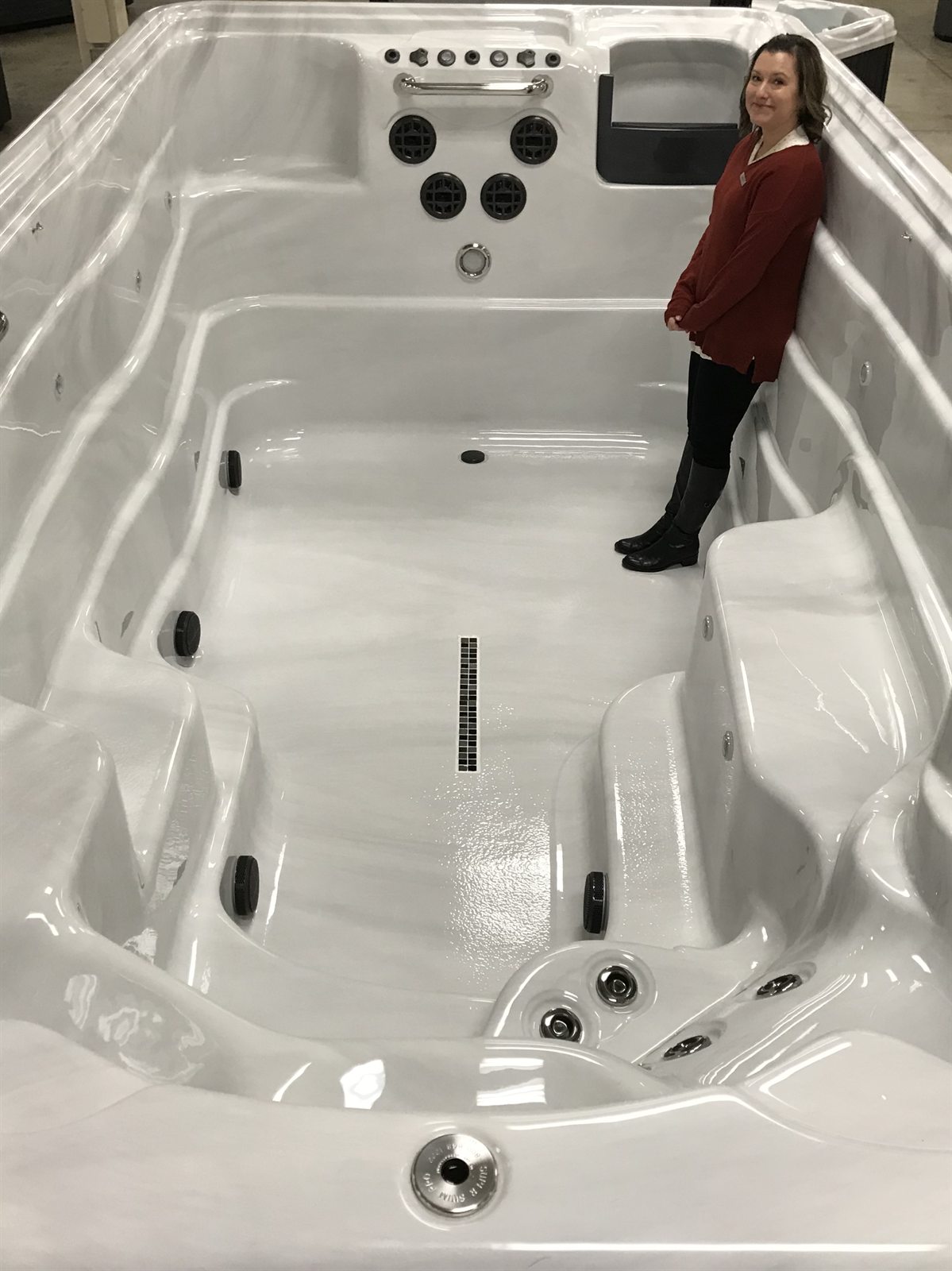
Swim spas commonly run from roughly 12 to 19 feet, with some extended models longer. You don't need to swim a full stroke cycle without moving — the current holds you in place — but a longer swim lane gives you more room to settle into position and makes the current feel more forgiving. Shorter shells can swim well too, but they rely more on a dialed-in current and sometimes a swim tether to keep you centered.
See typical figures in our sizes and dimensions guide.
Width and seating
Width affects both the swim and how many people can relax at once. A wider shell feels less constraining mid-stroke and leaves room for seating, loungers, or a separate spa zone. If relaxation and family time matter as much as swimming, don't under-buy on width.
Depth: don't overlook it
Water depth influences stroke mechanics, buoyancy, and how well aquatic exercise works. Too shallow and a vigorous freestyle stroke can clip the bottom; deeper water suits taller swimmers and water-running or therapy. If you're tall or plan serious aquatic fitness, ask about depth specifically — it's frequently glossed over.
Bigger isn't automatically better
Every foot of size adds water to heat, weight to deliver, and dollars to the price. The goal isn't the biggest swim spa — it's the right-sized one. Buy the smallest unit that comfortably fits your tallest swimmer, your most-people scenario, and your space.
The reality checks before you commit
- Footprint and clearance. Confirm the unit fits the pad and leaves room to walk around and service it.
- Access route. Measure gates, side yards, corners, and overhead obstructions. A swim spa is large and heavy and may need to be craned in.
- Weight when full. Filled with water and people, a swim spa weighs many thousands of pounds — your foundation must be engineered for it.
- Running cost. A larger volume of water costs more to keep warm; weigh that against how much extra size you'll actually use.
Quick sizing exercise
Picture your two main scenarios: your hardest swim, and your most-crowded relaxation moment. Choose the smallest unit that handles both comfortably. That's almost always your best value.
Next we go beneath the surface — literally — with shell construction and materials.
Get the free Hot Tub & Swim Spa Buyer’s Guide
Our sister site, HotTubInsider.com, offers a free buyer’s guide plus brand and dealer directories — the natural next step once you have the fundamentals down.