Buyer's Guide · Chapter 3 of 15
Swim Current Technology: The #1 Decision
Jet propulsion vs. propeller/paddlewheel vs. hybrid currents — the single most important thing to evaluate.
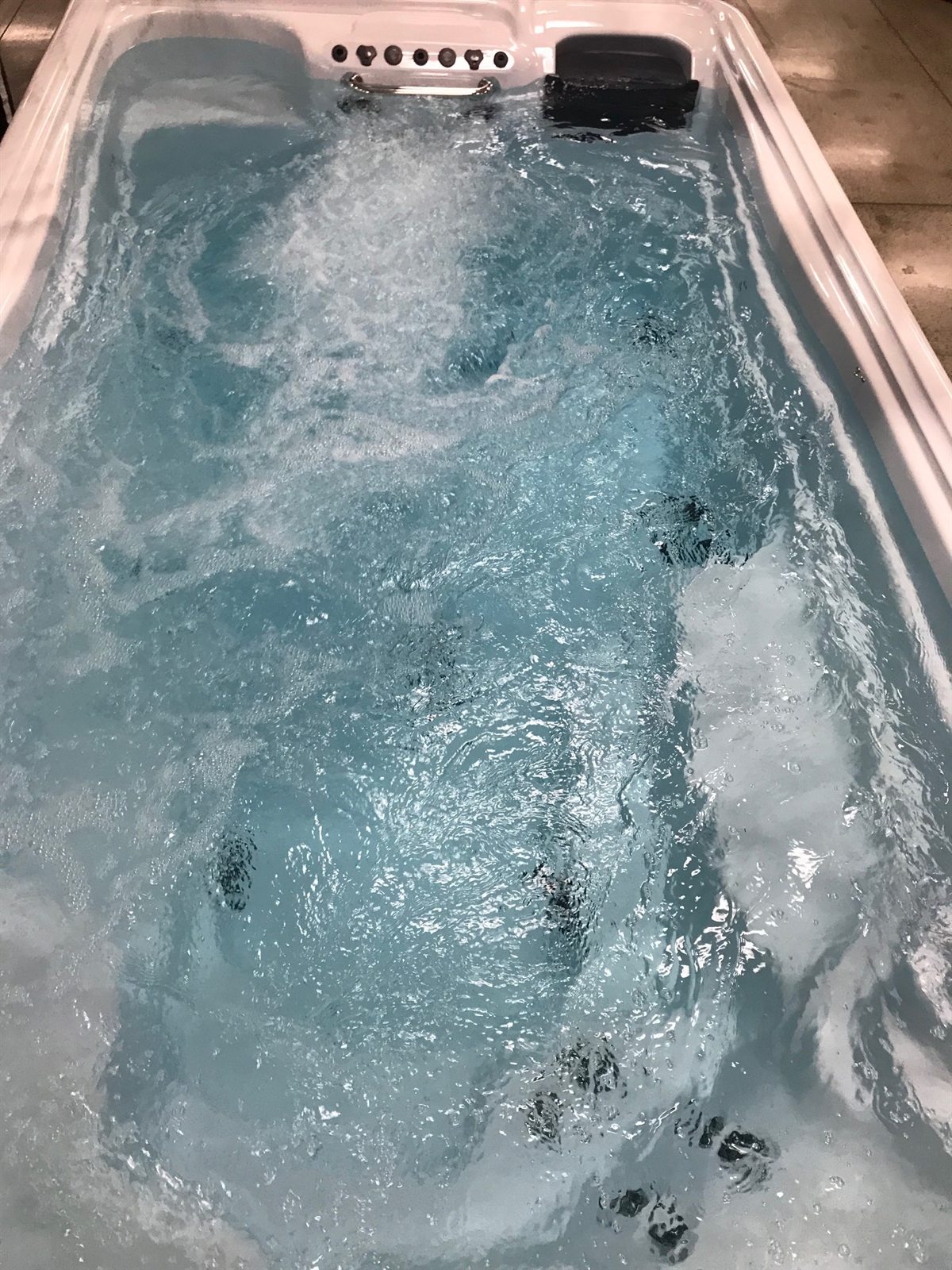
If you remember one thing from this entire guide, make it this chapter. The swim current is the heart of a swim spa — it's what you're really buying — and it's the hardest thing to judge from a brochure or a showroom that isn't filled with water. Two units that look identical can feel completely different to swim against.
There are three main ways to generate a current, plus hybrids. They differ in how the water feels: how wide and deep the flow is, how smooth or turbulent it is, and how natural it is to hold your position.
Jet propulsion
Jet systems create the current by pumping water through one or more jets at the swim end. They're the most common and usually the most affordable approach, and a well-engineered jet system can swim very well.
The risk is the flow can feel narrow, turbulent, or aerated — a stream of bubbly water rather than a smooth column. That makes it harder to hold a steady position and less pleasant for long swims. Quality varies enormously between a budget jet system and a refined one, so this is exactly where test-swimming pays off.
Propeller current
A propeller system uses a submerged propeller to move a large volume of water in a wide, smooth flow. Because it pushes a broad column rather than a concentrated stream, many swimmers find it feels closer to open-water swimming and easier to stay centered in. These systems are common at the performance end of the market.
Paddlewheel current
A paddlewheel uses a rotating drum of paddles to push a deep, wide, and notably smooth volume of water. Fans describe it as the most pool-like feel — a tall, even wall of moving water rather than a jet. It's typically found on premium units and is prized by dedicated lap swimmers.
| Current type | Feel | Typical position | Notes |
|---|---|---|---|
| Jet propulsion | Narrower; can be turbulent/aerated | Entry to mid | Quality ranges widely; design matters |
| Propeller | Wide and smooth | Mid to premium | Often favored for serious swimming |
| Paddlewheel | Deep, wide, very smooth | Premium | Most pool-like to many swimmers |
Why horsepower numbers mislead
Brochures love big pump or motor numbers, but raw horsepower tells you almost nothing about how a current feels. A high-horsepower jet can still produce a narrow, choppy stream, while a well-designed system can swim beautifully on less. What matters is the width, depth, and smoothness of the moving water and how easily you can hold position. Treat horsepower like engine specs on a car you haven't driven — interesting, but not the test.
Test-swim if you possibly can
Bring a swimsuit. Swim at the speed and duration you actually intend to use, not a 10-second demo. Notice whether the flow is even across your body, whether you drift, and whether it tires you out fighting turbulence. A showroom test swim will teach you more than any spec sheet.
Can't test-swim?
If an in-water demo isn't available, lean on independent owner reviews that specifically describe the swim, ask the dealer for video of someone swimming a sustained interval, and weight the current type accordingly. Our deep dive — Swim Current Technology Explained — walks through what to look and ask for.
With the current settled, the next levers are physical: size, depth, and swim length.
Get the free Hot Tub & Swim Spa Buyer’s Guide
Our sister site, HotTubInsider.com, offers a free buyer’s guide plus brand and dealer directories — the natural next step once you have the fundamentals down.