Buyer's Guide · Chapter 5 of 15
Shell Construction & Materials
Acrylic shells, backing layers, and what separates a durable shell from one that blisters or sags.
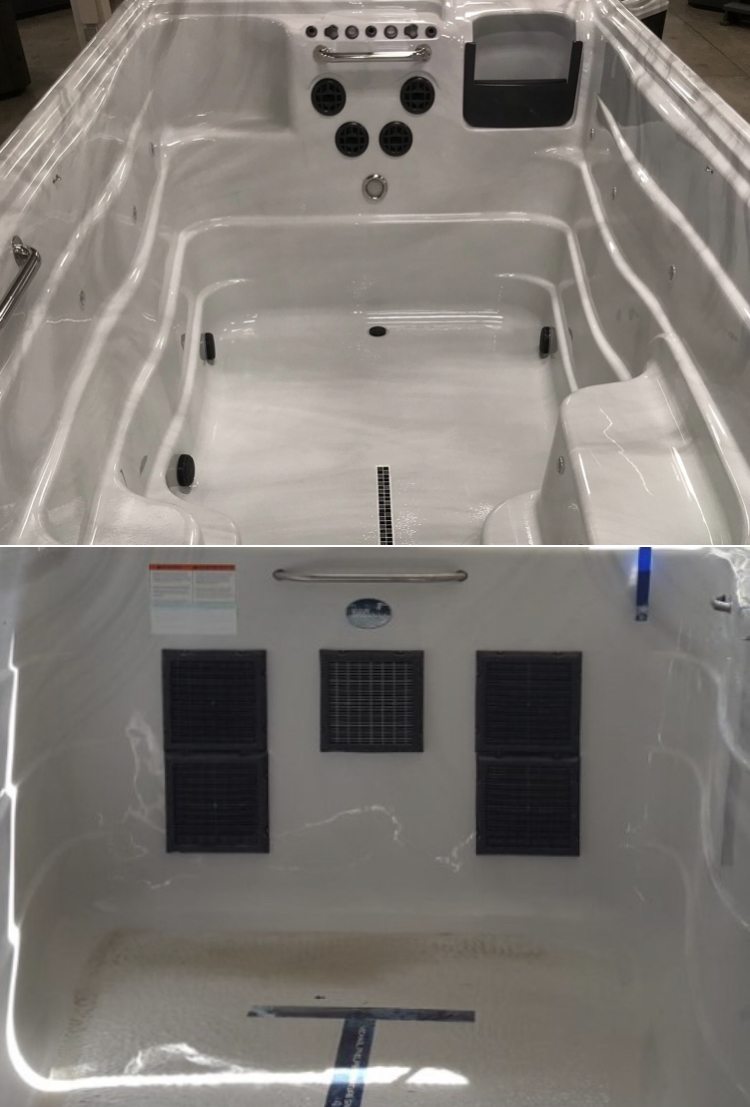
The shell is the molded body of water you swim and sit in, and it has to stay watertight and rigid for decades while holding tons of water. A good shell is nearly invisible — it just works, year after year. A poor one can blister, fade, stain, or flex. Because the shell is sealed inside the cabinet, you can't easily inspect it later, so it's worth understanding up front.
What a shell is made of
The surface you touch is typically cast acrylic — a durable, non-porous, repairable material that resists UV fading and chemical staining when it's made well. On its own, acrylic is thin and flexible, so manufacturers bond reinforcing layers behind it (commonly fiberglass and resin, sometimes with additional structural backing) to create a rigid, load-bearing shell. A large swim spa shell holds an enormous volume of water, so this reinforcement is doing serious structural work.
Why the backing matters
Two shells can have the same glossy acrylic surface and behave completely differently because of what's behind it. Thin or inconsistent backing can lead to flex, stress cracks, or sagging over time, especially in a long swim spa where the spans are large. When a dealer talks only about the acrylic color and pattern, steer the conversation to the reinforcement: how thick it is, how it's applied, and what supports the floor.
The question that separates shells
"What's behind the acrylic, and how is the floor supported?" A confident, specific answer is a good sign. Vague reassurance about the surface finish is not.
Common shell problems to ask about
- Blistering / delamination — bubbles or separation between the acrylic and its backing, usually a manufacturing or material quality issue.
- Fading and staining — better acrylics hold color and resist chemical marks; cheaper surfaces can dull or stain.
- Flex and stress cracks — a sign of inadequate reinforcement or support under load.
A strong, clearly-worded surface/shell warranty is one of the better proxies for a manufacturer's confidence — we cover how to read it in warranties.
In the showroom
Run your hand along the surface for an even, smooth finish. Press on large flat spans and floor areas to feel for flex. Ask to see a cross-section or cutaway if one's available — reputable makers are usually happy to show how their shell is built.
The shell holds the water; the cabinet, frame, and base hold the shell. That's next.
Get the free Hot Tub & Swim Spa Buyer’s Guide
Our sister site, HotTubInsider.com, offers a free buyer’s guide plus brand and dealer directories — the natural next step once you have the fundamentals down.