Buyer's Guide · Chapter 7 of 15
Insulation & Energy Efficiency
Full-foam vs. perimeter vs. hybrid insulation, and how to judge running costs — especially in cold climates.
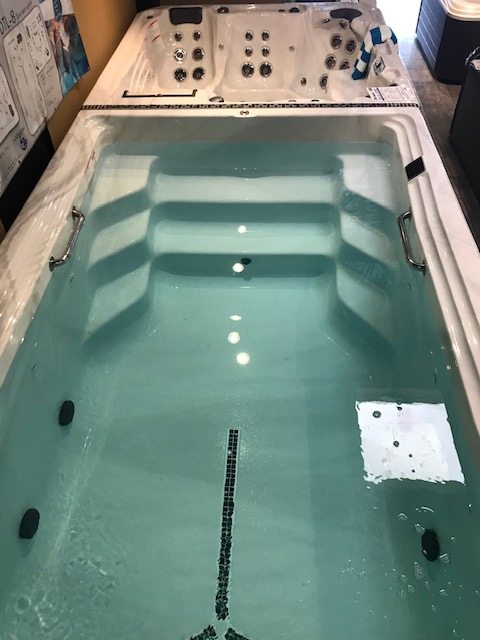
Insulation is the quiet feature that shows up on every utility bill for the life of the spa. A swim spa holds a large volume of water and, if you keep it heated, you're paying to maintain that heat 24/7. How well the unit holds heat — and how cold your winters get — largely determines your running cost. This is one of the highest-impact, least-glamorous things to get right.
The main insulation approaches
Full-foam fills the cabinet cavity with foam, surrounding the plumbing. It retains heat very well and adds structural support and noise dampening. The trade-off is serviceability: reaching a leak or fitting buried in foam can be more involved.
Perimeter (or partial) insulation focuses on the cabinet walls and often uses the heat given off by the equipment to warm the cavity. It keeps the plumbing accessible for service. Its real-world efficiency depends heavily on execution and climate — done well it can perform admirably, done poorly it lags in the cold.
Hybrid / multi-layer approaches combine elements of both — for example, foam on the shell plus insulated cabinet walls and a reflective layer — aiming for strong heat retention while keeping some access.
| Approach | Heat retention | Serviceability | Best suited to |
|---|---|---|---|
| Full-foam | Excellent | Harder to access | Cold climates, lowest running cost |
| Perimeter | Good (depends on design) | Easy access | Milder climates, easier repairs |
| Hybrid / multi-layer | Very good | Moderate | Buyers wanting a balance |
Don't forget the cover
The cover is part of the insulation system, not an afterthought. Most heat escapes through the water's surface, so a thick, well-fitted, high-quality cover dramatically cuts heat loss — and a worn or waterlogged cover quietly drives bills up. On dual-temperature units, you'll typically have separate covers for the swim and spa zones; budget for both.
Match insulation to your climate
In a mild climate, a well-designed perimeter system may be plenty. In a region with hard winters, heat retention becomes a year-after-year cost, and full-foam or a strong hybrid usually pays for itself. Read more in Insulation & Cold-Climate Performance.
Judging efficiency honestly
Be skeptical of headline efficiency claims tested under ideal conditions. Ask instead: What does it realistically cost to run this model, kept at my temperature, in my climate? Look for running-cost information grounded in real ownership, and remember that insulation, cover quality, and how hot you keep the water are the biggest levers.
Insulation keeps heat in; the heating system puts it there in the first place. On to that.
Dig deeper on energy & running costs
HotTubInsider.com breaks down energy efficiency for hot tubs and swim spas in more detail.